Michelle's independent resources for ESL Students at Vancouver Community College

This is a Canadian ESL blog for Intermediate and Advanced Students who want to learn and improve their English. Each PAGE above contains thousands of free English lessons, tutorials and practice exercises to help you learn and improve your English grammar, reading, listening, pronunciation, speaking, writing and editing. Some of the resources are Canadian. Others are from around the world.

The resources on this Canadian blog are all free, and I spend a lot of my time working on it, so please consider becoming a SUPPORTER. I appreciate all the support I get. It is the fuel that keeps me going.

Membership is FREE.

NOTE: To leave a comment, click on the word "comment" at the bottom of the page. A comment page will pop up.


Showing posts with label esl reading. Show all posts

Friday, October 9, 2015

Differences Between Canadian and American Thanksgiving

Most people are around the world think the Thanksgiving they've all seen in the movies or television  is the same for  for both Canadians and Americans.

They're wrong. Although there are some similarities between the two, Canada has its own unique Thanksgiving . Read on to learn about some of the key differences. 

Try the quiz at the bottom.  

A Tale of Two Thanksgivings: Canadian VS American Thanksgiving Celebrations

Saturday, April 25, 2015

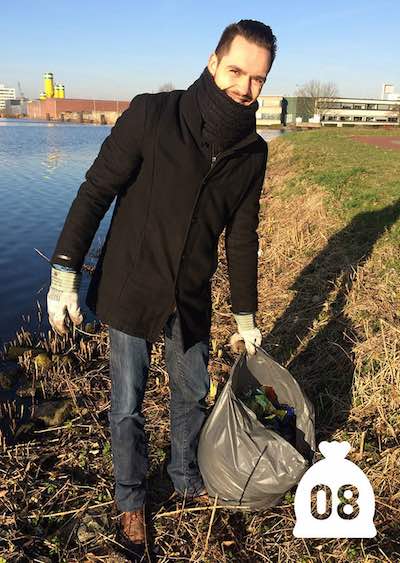
Dutch Man Cleans Up Entire Riverbank on his Way to Work


Tired of having the beautiful river view along his route to work spoiled by mounting trash on the bank, a Dutch man decided to start picking up litter during his daily commute.
“It took me about 30 minutes to fill one garbage bag with trash, but one bag doesn’t make a dent in a place as polluted as this,” Tommy Kleyn said of the stretch of river in Rotterdam, Netherlands. “I vowed to fill one bag of trash each day as I passed this spot.”
trash-picking-litterommy-CC-ThomasKleynKlein photographed his progress, mapped it on a Facebook Page. He was able to clear a short stretch of the river bank by himself in six days and, soon, people on the nearby bike path were joining him and his friends to collect a total of 22 bags of litter.
“The idea is to motivate people to fill one garbage bag with litter each year,” he posted to Imgur. “It only takes 30 minutes, it really makes a difference and you will be amazed about how good you feel afterwards.”
After reading his posts about cleaning up the river bank, people in Skagen, Denmark, picked up more than a ton of plastic waste from their beach. And back along the riverbank, Kleyn got an unexpected reward — a Eurasian Coot started nesting in the stretch of the river he cleaned.\
Coot-nest-Tommy Kleyn-Imgur

Wednesday, July 2, 2014

ESL Reading: Canadian History Week

144 Things Canada Has Given the World
A Skimming and Scanning Activity 

Canada might not be very old, but during its 147 years, it has made a number of contributions to the world.

In honour of Canadian History week, here's a Canadian trivia reading quiz to test your knowledge.  First, try the pre-reading activity to find out how much you know already. Then, see how many questions you got right.  

Later, discuss and write about some of the most important inventions ever made. Would your life be any different without them? 

From Anne of Green Gables  to the zipper, hockey to the hydrofoil hydrofoil, here's a list put together by The Hamilton Spectator. Some things that are precious to Canadians may cause others to scratch their heads.

You may not have eaten poutine unless you’ve traveled to Quebec or Ontario, while Timbits  and double doubles  may sound like gobbledygook  outside our borders.  Have a look.

Read more 

Saturday, July 27, 2013

World's Best Ad: Listening Quiz

 The Viral Positivity of 'Dumb Ways to Die'
based on information from a variety of sources including Reuters, Ad Week,Wikipedia, The Guardian,  BBC Guardian,  Business Weekly, the Dumb Ways to Die Campaign website.

Young people tend to ignore Public Safety Announcements (PSAs) warning them against the dangers of.......everything. Not only are they gloomy and depressing, but they're also boring!

So.....what's an ad agency to do when it wants to make them sit up and pay attention to a safety message? 

Make it irresistibly fun, catchy and incredibly easy to share with friends  on social media ... .just like everything else they get a kick out of.

That's exactly what an Australian advertising agency did with Dumb Ways to Die , an  animated  train safety spot for the Melbourne Metro, which has become the most  successful ad campaign in the history of the Cannes Lions International Festival of Creativity

The three minute TV and online commercial ( or PSA) is part of a much larger campaign that includes billboards, radio spots, karaoke jingles played in train stations and a website in which people can promise to be safe. 

The PSA itself a shows an animated video of cute little kidney shaped creatures doing the stupidest things you can imagine -  sticking forks in toasters, keeping a rattlesnake as a pet, setting fire to your hair, and selling both your kidneys on the Internet among others. 

All of the stupid actions end up in horrible and completely senseless fatal accidents. 

The ad then goes on to push the idea that the the dumbest and most pointless way to die is to be careless around trains. 


Within days of its release, the ad became a viral Internet hit racking up more than 20 million views. Today, more than 55 million viewers have seen it.  

The campaign, by advertising agency McCann Melbourne, swept the awards at this year's  Cannes Lions International Festival of Creativity, winning a record five Grand Prix awards, 18 Gold Lions, three Silver Lions and two Bronze Lions, the most ever awarded to one campaign in the festival's 59-year history.


It is the second year in a row that the top film award has gone to a campaign with a social message . 

US fast food chain Chipotle won last year  with a similarly with a  similarly-styled animation-with-music ad about sustainable farming and production. 

Here's the ad itself.


How did they do it?
Accidents and deaths among young people on Melbourne's trains have been increasing for years, but advertisers needed to find a way to promote a message about  safety in a way that would reach its intended viewers.  

"The idea for a song started from a very simple premise: What if we disguised a worthy safety message inside something that didn't feel at all like a safety message, " said John Mescall, executive creative director of McCann ad agency.   

"So we thought about what the complete opposite of a serious safety message should be and came to the conclusion that it should be an insanely happy and cute song." 

The song, composed by members of Australian bands the Cat Empire and Tinpan Orange,  has hit music charts in 28 countries, inspired three parody videos ( see video at the bottom of the article)  that have each been watched over a million times, was recently turned into an iPhone game that is now the seventh most popular free app in Apple’s (AAPL) app store, and is being turned into a children’s book. 

Fewer Accidents 

It has also been very successful in its original goal, preventing accidents on commuter rails in Melbourne. In the three months after the campaign was launched, the system experienced a 21 percent reduction in accidents and deaths compared to the same period last year. The goal was 10 percent.


According to an article in  Business Week  ,“Dumb Ways to Die” has been  success for some obvious reasons. It’s catchy and it's funny.  But it has another, less obvious, thing going for it: the power of positivity.
 
Two researchers from the University of Pennsylvania studied the New York Times most-e-mailed list (PDF) for signs of what kind of emotions were associated with people sharing information through email and other social media .

What they found was that people like content with positive messages - even when the message is a serious one.  The Dumb Ways To Die campaign had both, and therefore appealed to the widest audience - both adults, teenagers, children and even educators.

An industry analysis of Dumb Ways to Die 

Watch the following video on the story behind the campaign and answer the comprehension questions.


The Dumb Ways to Die PSA and train safety campaign has inspired many video parodies - with even more suggestions  and idea. 

Parodies and other associated videos  

BEFORE WATCHING:

Work on brainstorming, vocabulary and grammar
Before you watch any of the following videos, see if you can come up with your own lists of ideas for each of the titles. 

Then compare your ideas with the ones suggested in each video. How did you do?   


Here is one more parody, but with a message about living rather than dying. Before you watch, try to come up with as many "smart ways to live" as you can. Then, compare your list with the ones in the video.


Did you enjoy this post and the activities? 

Please leave a comment below to let me know how I'm doing.  Share the post and its activities with others through email or any other social media. 

Tuesday, July 2, 2013

144 Things Canada Has Given the World

July 1st to July 7th is Canadian History week,  so I thought I would start it off a list The Hamilton Spectator  put together on some contributions Canada has given the world. 

From Anne of Green Gables  to the zipper, hockey to the hydrofoil hydrofoil, it’s quite the list.  Some things that are precious to Canadians may cause others to scratch their heads.

You may not have eaten poutine, for example, unless you’ve traveled to Montreal, while Timbits  and double doubles  may sound like gobbledygook  outside our borders.  Have a look


Before you read:  How much do you know  already? 

Answer the questions BEFORE you read. 
Read. Then read and check your answers in the online quiz  Online interactive reading quiz 144 Things Canada Has Given the World 


1. Where does the story of Anne of Green Gables take place?  
2. When was the Blackberry invented?
3. Where did the inventor of basketball first teach?   
4. Where was the chocolate bar invented? 
5. Are timbits made from the missing hole in donuts? 
 6. What did the zipper replace? 
7. What is pablum? 
8. What was invented by Alexander Graham Bell? 
9. When did the Walkie Talkie become popular?   
10. What is a beaver tail? 
11. Why was the beaver so popular in Europe?  
12 .What do we use to take out the trash? 
13  What were the names of Mr. Dressup's "friends?"
14. What advantage did the paint roller bring? 
15 .What is Poutine?  
6  What was the slogan for Red Rose Tea?
17. What piece of women's underwear was invented by a Canadian teenager?  
18. What popular winter outdoor machine was invented by Bombardier? 

19. Who is Red Green? 
20  What makes the Robertson screwdriver different? 
21. What did Alexander G Bell invent that was replaced by record players?    
22. What Canadian space technology was used on the Space Shuttle Columbia? 
23. What is the harder version of ten pin bowling? 
24.  What did the Loonie replace? 
25. What is a sweet thing we put on pancakes or french toast?   


  Discussion and Writing Questions 

1.    In your opinion, what is the most important thing Canada has contributed to the world? Give reasons. If this thing had 
not been invented, how would life be different? 

2.    Rank your top ten inventions from Canada from 1 to ten. Be prepared to explain your 
        reasons.

3.    Which 5 things have actually made a real difference in people's lives?

4.  What would life be like now, if we didn't have the "zipper," the light bulb, penicillin, 
       or insulin?

5.  What is the most important thing YOUR country has contributed to the world. Explain
      your choice and why you think it is so important. In what way has this changed the way 
       people live, think or feel?
  
6.   Which of the following three  has been the most important to mankind: the wheel, 
       electricity, or the printing press? Explain your reasons. 

7.  What is the most important medical discovery ever made? Give your reasons?


8.  Choose the ONE  modern convenience you could NOT live without: the cellphone, the 
     computer, modern transportation (the bus, the subway, the automobile), the refrigerator, 
     or the battery.  


9.  The Canadian beaver is an important symbol for Canada because it shows that we are 
     a hard working, industrious people. What symbol best represents you country? Why? 
     What does it mean? 

10. What colour best represents your country? Explain. What does it symbolize? Give 
       examples.


Friday, November 30, 2012

World AIDS Day 2012:Getting to Zero

Tomorrow on World Aids Day, it is important to realize that despite achievements in both education and treatment, the world is still suffering from a global AIDS epidemic  

Yes, the number of HIV/AIDS cases around the world has finally stabilized

But, more than a million people a year are still getting the disease.

And, nine million victims of AIDS still don't have access to life-saving medication that would prevent them from dying. 

Also, let's not forget  that scientists still haven't found a cure for AIDS. 

So, we can't afford to sit around feeling complacent. Not only do we need to keep informing ourselves, we need to spread that information to the millions who are still unaware of some of the basic facts about AIDS. It is also time for us to DO something - whether it be learning  the facts, or by  getting more involved. in the AIDS movement. 

"Oh, we won't get AIDS "

As I was sitting in my Vancouver kitchen listening to the radio today, I heard  something that truly shocked me.  An interviewer was talking to a group of young people about AIDS and how they felt about it. 

The kids answered, " Oh we don't really have to be careful.  It could never happen to us."

"Why is that?" asked the interviewer.

:" We're not gay. Only gay people get AIDS." 

I had to laugh. Had these kids never noticed what was happening in Africa, Asia, and other countries around the world?

Had they not read stories about women and children here in Canada and the U.S. who were suffering from AIDS?

Had they completely ignored their school counsellors, and the pamphlets and warnings which are regularly given to young people - especially young people in high school. . 

This year's poster by a Canadian AIDS organization truly does say it all. 26 % of Canadians who have HIV AIDS don't even know it.

If you take those statistics and apply them to every country in the world, imagine what those numbers would be.  

Getting to Zero

30 years ago, the world acted to fight against HIV/AIDS. Extraordinary action generated around the world has saved millions of lives and brought hope to millions more. But, there is still a lot to be done.
  The World Health Organization has determined that the theme for World Aids Day from 2011 to 2015 is "Getting to zero by 2015: Zero new HIV infections,  Zero discrimination. Zero AIDS related deaths".

The focus on  zero new HIV infections and zero discrimination means placing an even greater focus on education.  The  focus on "Zero AIDS related deaths"  means pushing for much more access to antiretroviral medication for AIDS victims in Africa, India and Asia and a call for governments to act now.

WHO Video: Helping to get 15 million people onto antiretroviral treatment by 2015

A newly released United Nations World Aids Day Day report by the Joint United Nations Program on HIV/AIDS (UNAIDS)  shows that a renewed commitment to dealing with the worldwide AIDS epidemic  is producing results.

United Nations Aids Report Findings:  


Declining new HIV infections in children
The area where perhaps most progress is being made is in reducing new HIV infections in children. Half of the global reductions in new HIV infections in the last two years have been among newborn children.


Fewer AIDS-related deaths
The report shows that antiretroviral therapy has emerged as a powerful force for saving lives. In the last 24 months the number of people accessing treatment has increased by 63% globally.


More investments
The report shows that countries are increasing investments in the AIDS response despite a difficult economic climate. The global gap in resources needed annually by 2015 is now at 30%. In 2011, US$ 16.8 billion was available and the need for 2015 is between US$ 22-24 billion.


WHO Video: Helping to get 15 million people onto antiretroviral treatment by 2015 

 The 10 goals for 2015
  • Sexual transmission of HIV reduced by half, including among young people, men who have sex with men and transmission in the context of sex work. 

  • Vertical transmission of HIV eliminated and AIDS-related maternal deaths reduced by half;
  •  All new HIV infections prevented among people who use drugs;
  •  Universal access to antiretroviral therapy for people living with HIV who are eligible for treatment;
  •  TB deaths among people living with HIV reduced by half;
  •  All people living with HIV and households affected by HIV are addressed in all national social protection strategies and have access to essential care and support;
  • Countries with punitive laws and practices around HIV transmission, sex work, drug use or homosexuality that block effective responses reduced by half;
  •  HIV-related restrictions on entry, stay and residence eliminated in half of the countries that have such restrictions;
  • HIV-specific needs of women and girls are addressed in at least half of all national HIV responses;
  •  Zero tolerance for gender-based violence.
How much do YOU know about HIV/AIDS?
 
Go to the following websites to see if you can answer these questions. 

Comprehension Questions

1.     What is HIV? What is AIDS? 
2.     What is the difference between HIV and AIDS?  
3.     How can a person get HIV or AIDS?
4.     Who can get HIV or AIDS?
5.    Where does HIV/AIDS come from?  What caused it?
6.    How can people avoid getting HIV or AIDS?
7,    Why do experts stay that a person can have HIV or AIDS and not know it?
8.    What are the symptoms of HIV or AIDS?
9.    What are the treatments for HIV/AIDS
10   What countries in the world have the highest incidence of HIV / AIDS? Why?
11.  What countries in the world have the highest death rates due to AIDS? Why? 


VIDEO LISTENING PRACTICE: 

Watch the following video and answer the questions below


Questions: 

1.   What was responsible for saving man's and his wife's life? 
2.   Why the man mean when  he says "I did more than just survive?" 
3.   Why was the young girl born HIV free? 
4.   How did people discriminate against the man and his family? 
5.   Why do millions of people have a better chance of surviving today? 
6.  What is preventing people in the
7.  Lists all the benefits of AIDS treatments  the man spoke about.   


Listen, do the exercise and and sing along  


525,600 Minutes with Lyrics

Monday, September 17, 2012

William and Kate Sue Re: Nude Photos


Prince William and his wife Kate Middleton will file a criminal complaint against a French magazine for publishing nude photos of Kate which were taken while they were on a private holiday. 

Closet Magazine recently published pictures of Kate Middleton sunbathing topless  while she and William were holidaying on a private estate in France.
 
A spokesmen for the palace said the royal couple are furious because paparazzi took the photographs without Kate or William's  knowledge or consent. 

" It is unthinkable that anyone should take such pictures, let alone publish them," he said.

 St Jame's Palace confirmed on Friday afternoon that William and Kate will sue the magazine for what's called "breach of privacy" - where they feel their privacy has been invaded. 

Royal lawyers working for the Duke and Duchess of Cambridge are going to court to try and stop any more private photos of Kate being published.

The pictures of Kate sunbathing without her bikini top on have been published in two European magazines, one foreign newspaper.  They have not been published in the United Kingdom. 

The lawyers  will ask for the photographer to be caught and charged, as well as getting the magazines removed from the shops. 


A spokesman for Prime Minister David Cameron, says Cameron believes the royal couple are "entitled to their privacy."
 
Princess Diana's Death brought Respect for Privacy
 
The British press has been very careful about respecting the royals' privacy ever following the death of the prince's mother, Diana Princess of Wales, in Paris 15 years ago while being pursued by paparazzi on motorbikes.

The topless photos of Kate  were probably inspired by a British tabloid's recent publication of Prince Harry naked at a party in Las Vegas, said Caroline Jan, a media lawyer from Britain. 

She added that the Kate Middleton photos are a sign that the French public's demand for gossip is bringing back the idea that is it acceptable to invade the privacy of popular young royals. .

The publicity briefly affected the couple's tour of the Far East and South Pacific  to mark Queen Elizabeth II's Diamond Jubilee.  

BC's royal correspondent Nicholas Witchell, traveling with the royal couple, said Prince William looked furious as they left Malaysia. 

"He is absolutely determined to protect the privacy of his wife; he has always been very protective of her and that anger has mounted during the day."

Laurence Pieau, the editor in chief of the magazine that first published the photos has said,  "there is nothing shocking” about the photos. They show a young woman sunbathing topless, like you see millions of at the beach.”

Privacy lawsuits against French tabloids are common and are usually resolved with damage awards of between 1,000 euros ($1,300) and 15,000 euros, as well as printed notices telling readers the tabloid was condemned in court, said Christophe Bigot, a Paris-based media lawyer who doesn't represent the magazine. 

French privacy fines are set “based on personal suffering, and traditionally French judges assess these fines much lower than Anglo-Saxon judges,” Bigot said. 

Since Middleton was hidden from view, her award would probably be in the higher range, as much as 10,000 euros, though there is no specific limit to such awards, he said. 

Meanwhile , despite their recent problems with the media  Kate Middleton and Prince William  looked as cheerful as ever as they continued their tour and arrived in the Honiara International Airport in the Solomon Islands September 16. 

adapted from articles on the BBC, AP, The Telegram, the New York Times 

STUDENT ACTIVITIES 
  • Take a short comprehension quiz on the reading. 
  •  Then, watch the video called Paparazzi by Lady Gaga
  • Finally - write a comment about  what YOU think about invading the privacy of famous people. 
  •  IN YOUR OPINION does the the media (paparazzi) have the right to pursue and photograph celebrities and royalty in the privacy of their own homes or holiday spots? 


Sunday, February 12, 2012

Valentine's Day is not Just for Lovers

Many people assume that Valentine's Day is only for lovers. They think of it as a day when men and women tell their lovers, significant others, or spouses how much they love them. All the advertising focuses on lovers and the exchange of gifts such as jewelry, flowers and chocolates, or on romantic candlelight dinners.
But, Valentine's Day is NOT just for lovers! Love comes in many forms. Some of us have partners, spouses or others whom we love in a romantic way. But, we also love our children, our parents, grandparents, friends and other people who have had a strong influence in our lives.  Valentine's Day gives us the opportunity to tell them that we also love and appreciate them.  


On  February 14th,people in Finland celebrate  Ystävänpäivä, which is translated as Friend's Day. In Mexico, it is called the Día del amor y la amistad, the Day of Love and Friendship.
There is no doubt that Valentine's Day has been over commercialized in Canada and the United Sates, but it still remains a wonderful day when we can express love and appreciation to ALL the important people in our lives, including our children, our family and our friends.  

In almost every elementary school in North America, children make Valentine's Day cards for their parents as a way of reminding them that they love them. Why shouldn't we as parents return the favour - not just with cards, but with words and actions.

My children know that I love them, but it never hurts to say it a little more often. I have always given them cards and chocolates on Valentine's Day, and there have even been years when we have celebrated Valentine's Day together as a family by going out to dinner. I have always telephoned my parents to tell them how much I appreciated them, especially after I had kids of my own and realized just how difficult it was to be a parent. Now that my father is no longer alive, Valentine's Day is one specific day when I spend time thinking about him and about how much I appreciate what he gave me. It seems appropriate to do this on a day that focuses on love. 

For many families, Valentine's Day  evokes  feelings that children may not know how to deal with. Divorced or separated parents may find this a good day to discuss feelings. This is a good opportunity to tell your children how much you love them, regardless of their living situation. It is also a perfect time to hear what your children have to say, to empathize with their emotions and have a real conversation about love and emotions.

How about all the friends who have been there for us in good and bad times,and who have helped us get through some of the most difficult times of our lives?  Don't they deserve a little expression of the love and gratitude we feel towards them? Of course they do.

So, by all means send the love of your life a dozen red roses, or spend some intimate, romantic time with him or her, but remember to let the other people in your life know that  they are important to you  and you love them because Valentine's Day is not just for lovers. It's for everyone you love.


What do  YOU think? Is Valentine's Day just for lovers?? What do you do in YOUR original country, or culture?  

Let me know what you think.  I value your comments.

Sunday, January 1, 2012

Any Plans to Turn Over a New Leaf?


Have you promised to turn over a new leaf , and break some bad habits, or develop some good habits in 2012? You are not alone. Every year millions of people around the world make New Years resolutions to lose weight, start exercising, quit smoking, spend more time with their family, or even study harder.

A New Year's resolution is a promise to yourself to improve your life in some way. You can improve your life by starting something new, by trying harder at something, by cutting down on something, or even quitting something OR  you can just keep doing what you are doing now. 

When did it start?  

The idea of making New Year's resolutions is not a new one. Although historians don't agree on exactly when the concept first began, one theory is that the tradition began in 2,000 BC ( before the Christian era) in Babylon. Apparently the ancient Babylonians celebrated New Year's on March 23, and marked the day by returning something borrowed from neighbours the previous year.

In 154 BCE the Romans decided to be different and declared January 1 the first day of the new year instead of March as before. At this time the Romans began the custom of making new year's resolutions by promising to be good to others.

So.....how about you?
What are YOUR goals or resolutions for this year? 

Since this is a blog aimed at helping you to learn, or improve your English, have you thought of making New Year's resolutions aimed at improving specific English skills?  How about using some of your newly learned vocabulary immediately as soon as you leave class?  Why not try speaking to more English speakers at the park, the community centre, or in the cashier's line-up.

In my next blog, I will discuss some ways to make your New Year's resolutions realistic and achievable. In  the meantime, try out this resolution generator Resolution Generator from Monin Verlarde.

Just for fun, have a look at  Top 10 Resolutions for 2012 
 

Saturday, December 31, 2011

New Years Traditions Around the World


What does the colour yellow have to do with bringing in a new year?

In PERU, the colour yellow plays a very important role. Here, yellow symbolizes good luck, and people often wear yellow underwear on New Year's Eve in order to bring them good fortune. At New Years shamans from around the country attend fairs to perform ceremonies that include showering subjects with yellow flowers, or passing a guinea pig over subjects' bodies.

All countries around the world celebrate the new year. But many of them celebrate it at different times and with different traditions.  Although western countries consider January 1st to be the first day of their new year, many Asian like China, Vietnam and Korea follow the lunar calendar. That means their new year starts in late January or February and lasts not for one day, but up to two weeks.   I have already discussed the way Americans and Canadians ring in the new year.

Today on New Year's Eve,  here is a look at a few of the good luck traditions people from other countries believe will bring them good fortune and prosperity in the coming year. 

 SPAIN and MEXICO:Both Mexicans and Spaniards  begin eating grapes as soon as the clock strikes midnight. Each person eats 12 grapes, one with every toll of the bell to bring good luck for each of the 12 months ahead.

COLUMBIA: Colombian families make a rag doll called "Mr. Old Year." They dress it in old clothes and with things the family doesn't want anymore, and which has brought them pain or sadness. Then, at midnight, they set the doll on fire. This symbolizes burning the past and getting ready to start a happy new year without bad memories of the past.

JAPAN: In Japan, families prepare for a full week before New Year's Day, or Oshogatsu. The house must be thoroughly cleaned, all debts must be paid, and all disagreements must be resolved and forgiven. Before midnight, 108 bells ring, to symbolize the elimination of 108 troubles. Thus, the Japanese start the year with a clean house, and no troubles, debts, or disagreements to contend with. The day after New Year’s is First Writing Day, when the Japanese write out their hopes and dreams for the new year.

PHILIPPINES: People in the Philippines have a New Year's custom of wearing  clothes with circular patterns like polka dots, as it is believed that circles attract money and fortune.  For the same reason, many circular fruits are served on New Year's Day.  Other traditions include throwing coins at the stroke of midnight to increase wealth for the coming year.

ENGLAND: The British believe that their fortune for the next year depends on the first guest to enter their door after midnight. They believe the first visitor of each year should be a man carrying gifts.  Traditional gifts are coal for the fire, a loaf for the table and a drink for the master. For good luck, the guest should enter through the front door and leave through the back. Guests who are empty-handed or unwanted are not allowed to enter first.

THE NETHERLANDS: The Dutch burn bonfires of  Christmas trees on the street on New Year's Eve as a way to purge the old and welcome the new.

GREECE: The Greeks bake a special bread stuffed with a coin buried in the dough. The first slice is for the Christ child, the second for the father of the household and the third slice is for the house. If the third slice holds the coin, spring will come early that year.

CHINA - For the Chinese New Year, every front door is adorned with a fresh coat of red paint, red being a symbol of good luck and happiness. Although the whole family prepares a feast for the New Year, all knives are put away for 24 hours to keep anyone from cutting themselves, which is thought to cut the family's good luck for the next year.

Click on the following link to see and read about more wonderful and interesting New Years traditions from different countries. Slide show of New Years traditions from around the world  
How about you? Do you have any special traditions or ways you like to celebrate New Year's Eve or New Year's Day?  Write me a comment and read my next post on how the people of Vancouver like to celebrate New Year's Day. 


Wednesday, December 28, 2011

Vancouver Polar Bear Swim 2012

Splash in the New Year

Are you brave enough to participate in this year's Polar Bear Swim?

Each city and country has its own special way to greet the New Year. Vancouver, Canada  is no exception. For the past 92 years, thousands of people have celebrated  the New Year by jumping into the freezing waters of English Bay.  This year, the city will host the 92nd Annual Polar Bear Swim. Do you have the courage to carry on the tradition?


 Batman had a good time at the 2011 Vancouver Polar Bear Swim 
The Polar Bear Swim is hosted by the Vancouver Polar Bear Swim Club, one of the largest and oldest Polar Bear Clubs in the world. Its initial swim took place in 1920 when a small number of hardy swimmers took the plunge into English Bay on New Year's Day. The swim has grown from 10 in the first year to thousands today.  For many people who simply continue their New Year's Eve celebration well into New Year's Day, it is the highlight of the year.

The swim takes place at 2:30pm on January 1st. (tomorrow) Costumes and the Peter Pantages Memorial 100 yard swim race are the highlights of this event. To become a club member, you must register before the swim in front of the English Bay Bathhouse from 12:30pm - 2:30pm on New Year's Day. You may also register by clipping out the coupon in the Province Newspaper and presenting it at the registration desk the day of the swim. Don't forget to fill out the prize entry form at registration. Donations of non-perishable food bank items will be accepted.

Your free membership includes a commemorative button after you take the plunge, and who knows, maybe you will win one of the great prizes available. Regardless, you can be proud to say you joined this 'chilly' club and can call yourself truly Canadian after all.

If you don't plan to get cold and wet, come down to English Bay to watch the event. Even watching other people freeze is a fun way to welcome the new year in Vancouver. 


For more infoirmation on the Polar Bear swim go to: http://vancouver.ca/parks/events/polarbear/history.htm